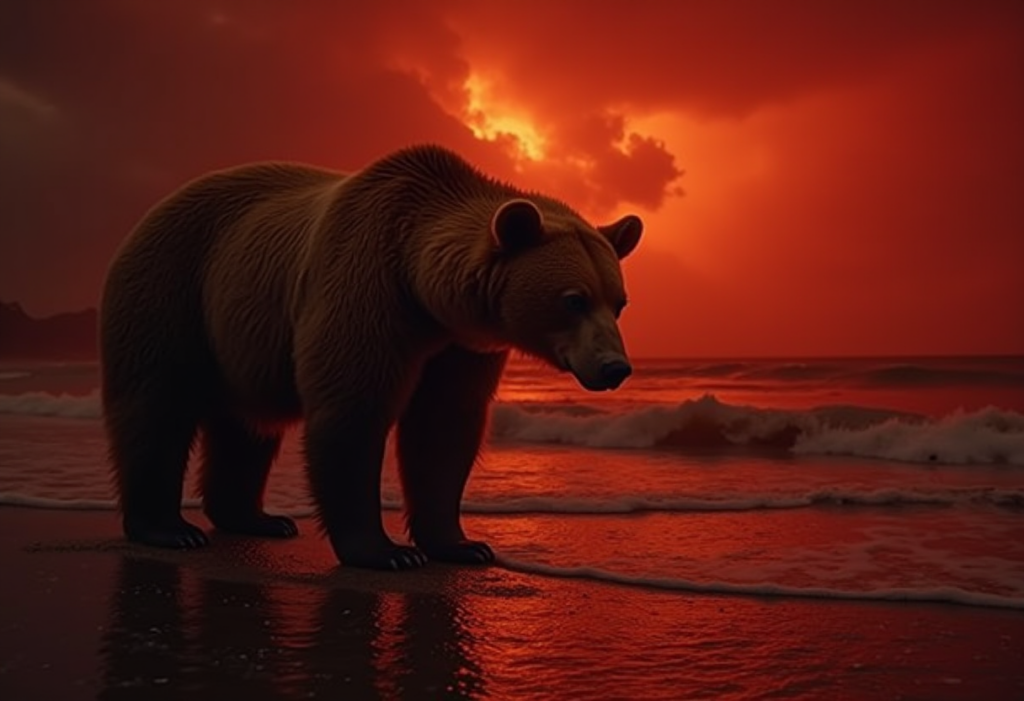
“Last night I dreamt I was walking with two large brown bears. I became very at ease with them, since they didn’t seem to notice my presence or pose a threat. I felt they were my friends. Then one of them began sniffing the air and turned my way. I remembered I’d made a bacon sandwich earlier and assumed they were smelling it on my hands and face. My blood ran cold. They clearly saw me as food now and pounced. They were biting my arms and legs. I had an app on my phone which was designed to call for help in the event of a bear attack. I attempted to activate the distress call. I awoke from the dream believing it wasn’t real. And yet it was.”
Roger Pingleton
I awoke from this nightmare in the middle of the night. Bears are recurring dream symbols for me, but this felt different. This dream felt real. It felt significant.
These dream bears clearly represented powerful, virtually unstoppable forces which wanted to eat me. It didn’t take long to connect the dots.
Since my departure from Maximus, working for HHS, the world has changed for developers such as myself in significant ways.
One of the first jobs Artificial Intelligence (AI) came for was programming. It was low hanging fruit in the eyes of the AI companies.
AI literally wants to eat my job and my livelihood along with it.
I’ve adapted to other changes in technology over the years: first in print media, then the web, then mobile programming. So my first strategy, was to attempt to meld with AI, to swim with the flow, to befriend the beast by becoming an AI Engineer. This idea has never sat well with me for many reasons.
Simply put, AI isn’t like every other career in which I’ve immersed myself. AI feels at best like a useful, uneasy friend and at worst like something which can and will turn on those who foolishly befriend it.
Alarming headlines confirm as much:
- Anthropic and OpenAI CEO’s recently urged slowing the pace of AI development.
- Gizmodo even made a connection to a beast-like life form: https://gizmodo.com/sentient-ais-bigfoot-era-could-arrive-at-any-moment-2000811048.
- At the same time, the Wall Street Journal reported that an Anthropic researcher quits over “Out-of-Control” AI fears (https://www.wsj.com/tech/ai/anthropic-researcher-quits-over-out-of-control-ai-fears-707b7628).
If all of this seems alarming, it should!
My Intuition Confirmation
As I lay in bed pondering this, I tried to take my mind off of the threats which I felt surrounded by. So I began doom scrolling on Instagram, and something caught my eye: an ad about AI Agents (captured below).
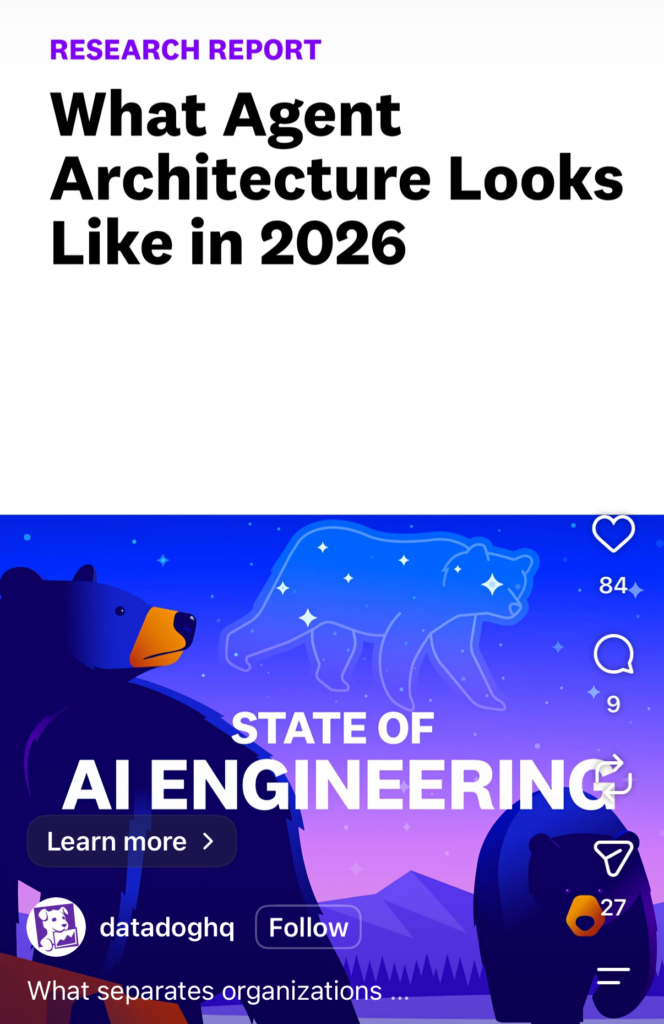
Say hello to my little friends! There they were, waiting to eat me. (It was not lost on me that the right bear seemed to be staring in my direction).
Sometimes the Universe playfully provides confirmation it seems.
Okay then, if my intuition is right, that AI truly is a type of beast, what do we know of its nature?
Can AI Be Domesticated?
For the moment, let’s not separate this AI beast itself from the way it has been employed for harm. I recognize there are culpable bad actors behind all of these use cases.
AI has been used for: non-consensual deep fake images, political disinformation, synthetic false media reports, voice cloning fraud, sextortion, elder scams, crypto and investment scams, gender related hiring discrimination, housing based insurance discrimination, race discrimination based on facial recognition, unfair predictive policing, chatbot related psychological harm, AI addiction mechanisms, labor replacement (of customer service reps, content moderators, translators, developers, and junior analysts, often without notice or retraining support), negative environmental and community impact due to datacenter expansion, artistic theft from visual artists and musicians.
The list goes on. Even worse our economy is so heavily invested in the future of AI, that it may very well collapse at some point, given that it is highly unlikely there will be a positive return on the massive AI infrastructure investment.
Indeed AI seems to have brought out the worst in human nature. Can greedy humans recognize the harm they are doing and tame the AI beast, or are we caught in an arms race which will destroy us all?
What of our greater human traits of compassion and empathy? Can AI be used to help people?
Cats and Dogs
Of all the beasts humans have managed to domesticate, surely cats and dogs have given us more joy, utility, and companionship than we’ve given them. Even the names “shepherd” or “sheep dog” hint of their utilitarian nature in the lives of farmers. Pointers, retrievers, hounds and spaniels have all been invaluable as hunting companions.
Pit bulls have been known to fend off bear attacks directed at their owners, and in an about turn, cats have also protected family members from pit bull attacks. Karelian Bear Dogs were specifically bred to track and hunt bears.
It’s impossible to read stories such as Where the Red Fern Grows or Old Yeller and not be moved by inspiring acts of canine bravery in the face of danger.
In many ways it feels like we are in an adversarial position with AI and need the help of a kinder, loyal, braver AI companion to help defend ourselves from its harms.
Dogs have alerted us to dangers throughout the ages and protected us against intruders. Could similar AI mechanisms be invented or directed? Could they be operated in a way which is also not harmful to the environment or communities (on the edge, on our personal devices)?
This concept is the very idea behind Humanitized AI: to make us more human, and to “it-ize” AI, or in other words to relegate AI to the realm of things and to put it in its rightful place.
I still have serious doubts about the overall benefit of AI, but I am willing to give this a try, especially given that this trend of harmful AI use does not seem to be going away soon.
Coders such as myself will not go quietly into the night. When AI comes for our jobs, expect us to create solutions to counter its harms. It’s in our DNA as developers; we see a problem, we fix it.